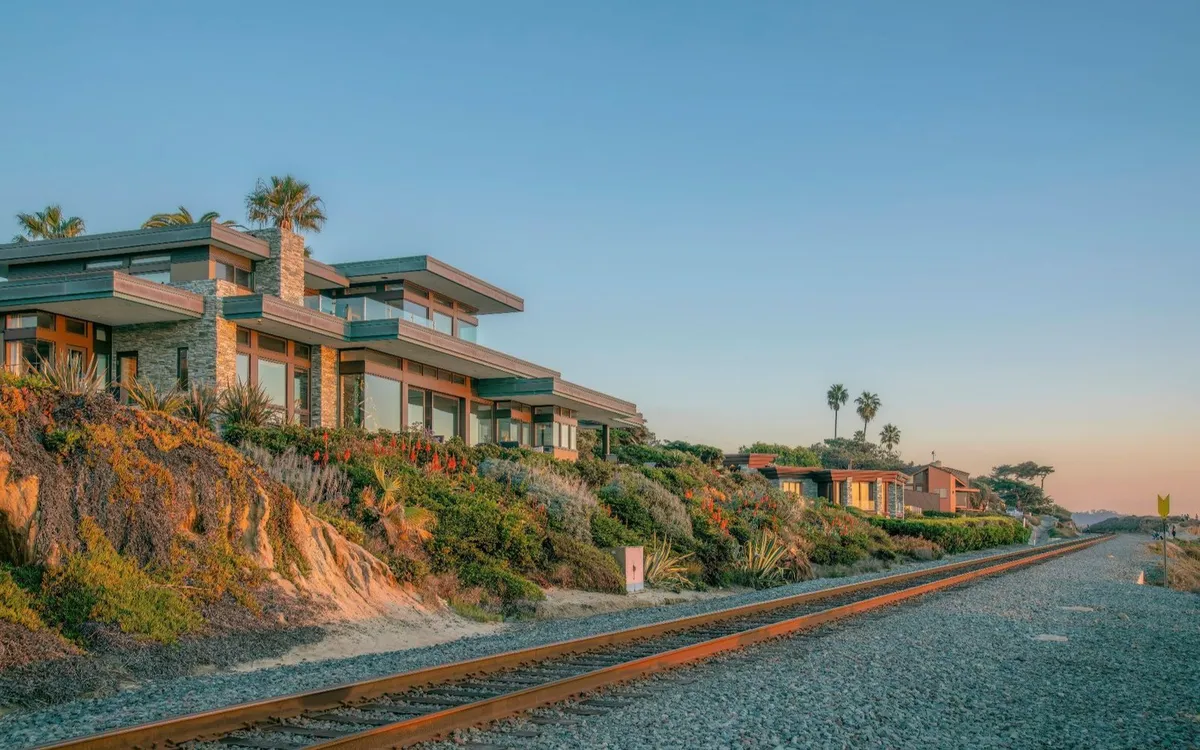
What Coastal Ownership Actually Costs: Eight Line Items Buyers Miss
The purchase price is the number everyone negotiates and the number nobody is surprised by. The surprises arrive in the first eighteen months, and they are almost always items that were knowable on day one. Here are the ones I walk clients through before they write an offer on the coast.
1. The supplemental tax bill nobody budgets for
When a property changes hands in California, the county assessor reassesses it to its new market value. The regular tax bill already in the mail was calculated on the previous owner’s assessed value, so the county issues a separate supplemental bill covering the difference for the remainder of the fiscal year — sometimes two of them, if the purchase straddles the tax year. It arrives months after closing, it is not collected through your impound account unless you arrange it, and on a luxury purchase it is not a small cheque.
2. Your assessed value is not the seller’s assessed value
Under Proposition 13, assessed value rises at a capped rate each year until there is a change in ownership or new construction. A home held by the same family for thirty years can be carrying an assessed value far below what you are paying. Looking at the current tax bill and assuming it is your tax bill is the single most common budgeting error I see. Work from your purchase price, not from the seller’s history.
If you are moving within California and are 55 or older, severely disabled, or a victim of a wildfire or declared disaster, Proposition 19 may let you carry your existing base year value to the new home, within limits. That is a conversation for your CPA, early — the sequencing of the sale and the purchase matters.
3. Mello-Roos, where it applies
Community Facilities Districts, created under the Mello-Roos Act, fund infrastructure and schools in newer developments through a special tax on the properties inside the district. It appears on the property tax bill, it is generally not based on assessed value, and it has a defined term. Older coastal towns largely predate it; newer inland and master-planned areas often carry it. Either way it is disclosed, it is knowable, and it belongs in the monthly figure you use to compare two houses.
4. HOA dues are the smaller half of the HOA question
The monthly dues are on the listing. What is not on the listing is the reserve study: whether the association has funded what it will need to replace, and when. A well-run association with a healthy reserve and a boring newsletter is worth paying more for. An underfunded one eventually sends a special assessment, and on coastal properties those assessments tend to be for expensive things — seawalls, decks, elevators, roofing that salt air has eaten. Read the reserve study, not just the dues line.
5. Insurance has become a real variable
This is the line item that has changed the most in recent years, and it changes by address rather than by neighborhood. On the coast, the questions are wind, water intrusion and — for anything near a floodplain or lagoon — whether flood coverage is required or merely wise. Inland and in the ranch areas, the question is fire: much of the back country sits in a high or very high fire hazard severity zone, admitted carriers have become selective there, and the California FAIR Plan plus a wrap-around policy is sometimes the only structure available.
Get a real quote for the actual address during your contingency period. Not an estimate, not a comparable, a quote.
6. Bluffs, seawalls and drainage
If any part of the property sits on or above a bluff, add three questions to your inspection list: what protective structures exist, who is responsible for maintaining them, and what permits they were built under. Shoreline protection in California is governed tightly, and rebuilding or extending it is not a routine contractor job. Drainage is the quieter version of the same issue — water that used to run somewhere else is the origin of a great many coastal repair bills.
7. The coastal zone shapes what you can change
Improvements inside the coastal zone generally require a coastal development permit, issued by the city under its certified local coastal program or by the California Coastal Commission. That includes work that is unremarkable elsewhere: a second story, a pool, a significant wall, tree removal in some places. The timeline is real and the outcome is not guaranteed. If your plan for the house depends on a remodel, price the permitting risk before you commit to the plan.
8. Septic, wells and water districts
Away from the coast, plenty of excellent properties are not on municipal sewer. A septic system has a service life, an inspection protocol and a replacement cost, and the replacement cost on a constrained lot can be considerable. The same applies to private wells and to the specific water district serving the parcel, whose rates and rules are not uniform across the county.
And one that is not a line item
Salt air is relentless. Exterior finishes, window hardware, garage mechanisms, outdoor kitchens and metal anything run on a shorter maintenance cycle within a few blocks of the water than they do two miles inland. It is not a defect and it is not a reason to buy elsewhere. It is simply an annual number, and owners who plan for it are not the ones who are unhappy in year three.
What to do with this list
Bring it to your contingency period and turn each item into a document: the tax bill, the reserve study, the insurance quote, the permit history, the septic report. Every one of them is obtainable before you remove contingencies. The buyers who are happiest two years in are not the ones who paid the least; they are the ones who knew the whole number before they signed.
If you are early in a coastal search, the buyer guide is a good place to start, and I am glad to go through this list against a specific property with you.
This is general information, not tax, legal or insurance advice. Property tax treatment, insurance availability and permitting requirements depend on the specific parcel and change over time — confirm them with your CPA, your attorney and your carrier for the property you are considering.